
As a colorist venturing into sound design and music, you already have the most important thing: technical discipline that creates emotional impact. This guide applies that mindset to audio. Great visuals alone are not enough even stunning footage needs a carefully crafted soundtrack to bring the story to life. The goal here is a practical audio workflow that mirrors your color grading process, built on analogies that connect what you know about color to core audio concepts.
Core Concepts: Audio Basics Every Colorist Should Know
Sound design encompasses all audio elements that complement the picture: dialogue, sound effects, foley, and music. Each element anchors the story as much as color does. In practice: dialogue needs proper exposure the way faces need proper exposure in color. Sound effects and foley add texture, just as grain adds authenticity to a grade. Ambiance establishes time and place, the way a color tone or LUT establishes a scene’s emotional environment. Music reinforces mood and pacing, exactly as a color palette reinforces emotional tone.
Colorist-to-Audio Analogies: Translating Terms You Know
Lift (Shadows) to Low-End EQ (Bass). Lift raises or lowers black levels, setting the shadow foundation of your image. In audio, adjusting low-end EQ sets the foundation of warmth and weight. Boost for thickness; cut for clarity same logic, different medium.
Gamma (Midtones) to Midrange EQ. Gamma targets the midtone values where most image detail lives. Midrange EQ (500Hz ~ 2kHz) handles the body of most sounds. Small changes in either have outsized effects on clarity and presence.
Gain (Highlights) to High-End EQ (Treble). Gain defines brightness and sparkle in the image. High-end EQ does the same for audio boosting highs adds shine, cutting harsh highs softens the equivalent of overexposed glare.
Contrast to Dynamic Range. Visual contrast is the difference between dark and bright. Audio dynamic range is the difference between quiet and loud. Both create depth and punch when used well. Over-compression in audio is like crushing blacks and whites: detail is lost at the extremes.
Saturation (Color Intensity) to Harmonic Distortion. Adding color saturation makes visuals more vivid. Audio saturation tape emulation, tube drive adds harmonic richness and warmth. Use both with the same restraint: a touch of each adds depth; too much announces itself.
Workflow Tips: Approach Audio Like Color
Plan for mood early just as you discuss the desired color look with a director, clarify the sonic mood upfront. Organize your timeline with the same logic you apply to a node tree: dialogue on one track, effects on another, music separate. Begin with a primary balance before adding processing, the same way you correct exposure before building a look. Then dive into secondary detailing, addressing specific issues and layering complexity. Refine dynamics and tone iteratively. Finally, adapt to the delivery format: a social media mix needs tighter dynamics and upfront vocals the way a mobile-optimized grade needs sharper contrast to compensate for small screens.
For a deeper exploration of how sound and color integrate at the creative level, see The Resonant Spectrum and The Art of Silence.
Related Reading from Final Stage Post House
- The Emotional Frequency: How Sound Design Shapes the Narrative
- You Locked the Picture. Now What? A Practical Audio Post Guide
- The Power of Color Psychology in Film
Frequently Asked Questions
Do colorists need to learn audio software to apply these concepts?
Not necessarily. The conceptual framework primary balance, secondary detailing, format-specific delivery applies regardless of software. Understanding the principles first makes learning any specific tool much faster.
What is the audio equivalent of a LUT?
A pre-made audio preset or impulse response (IR) for reverb functions similarly it applies a characteristic look to a sound quickly, as a starting point to be refined rather than a final answer.
How do you avoid over-processing audio?
The same way you avoid over-grading: ask whether each processing step is serving the story or just demonstrating capability. If you can remove a plugin and the scene still reads correctly emotionally, remove it.
Source: Sound Design and Music Composition for Colorists – Rodrigo Perez-Segnini on LinkedIn
Ready to approach your post-production as a unified creative system? Work with Final Stage Post House.

Related Posts
June 18, 2026
You Locked the Picture. Now What? A Practical Audio Post Guide
Picture lock isn't the finish lineâit's the starting gun for audio post.…

June 18, 2026
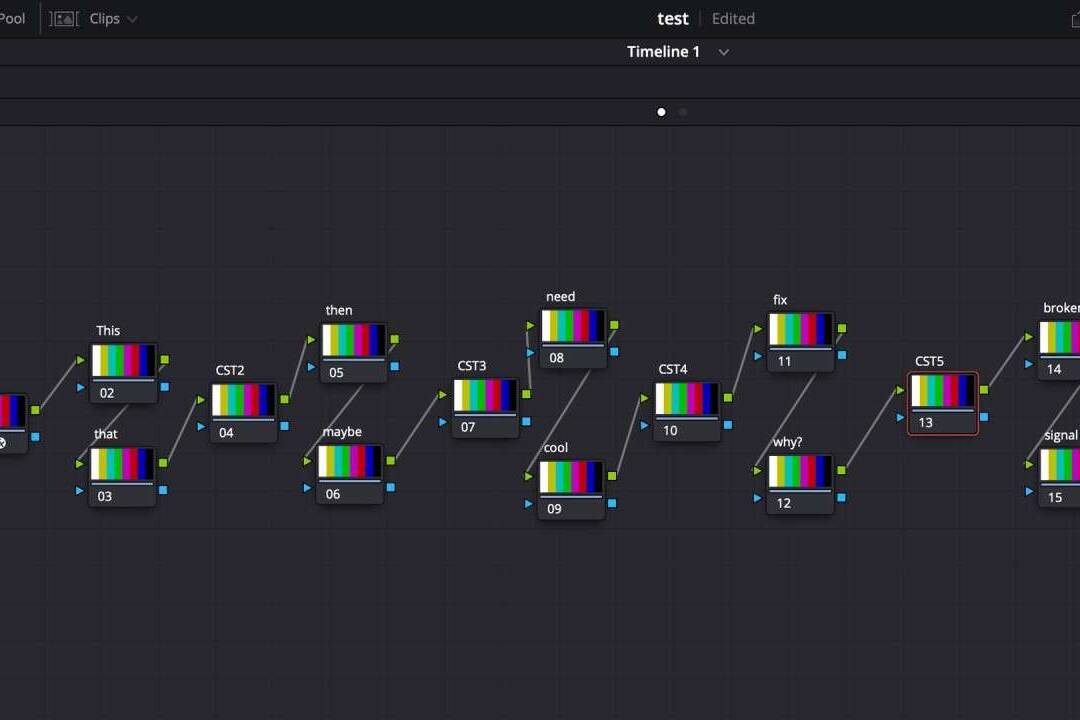
Color Space Transforms in DaVinci Resolve: How Many Is Too Many?
Stack too many CSTs in DaVinci Resolve and you risk banding, hue shifts, and…

June 18, 2026
The Frequencies That Shape Our Perception
Light and sound are both waveforms processed by biology. Understanding how we…