

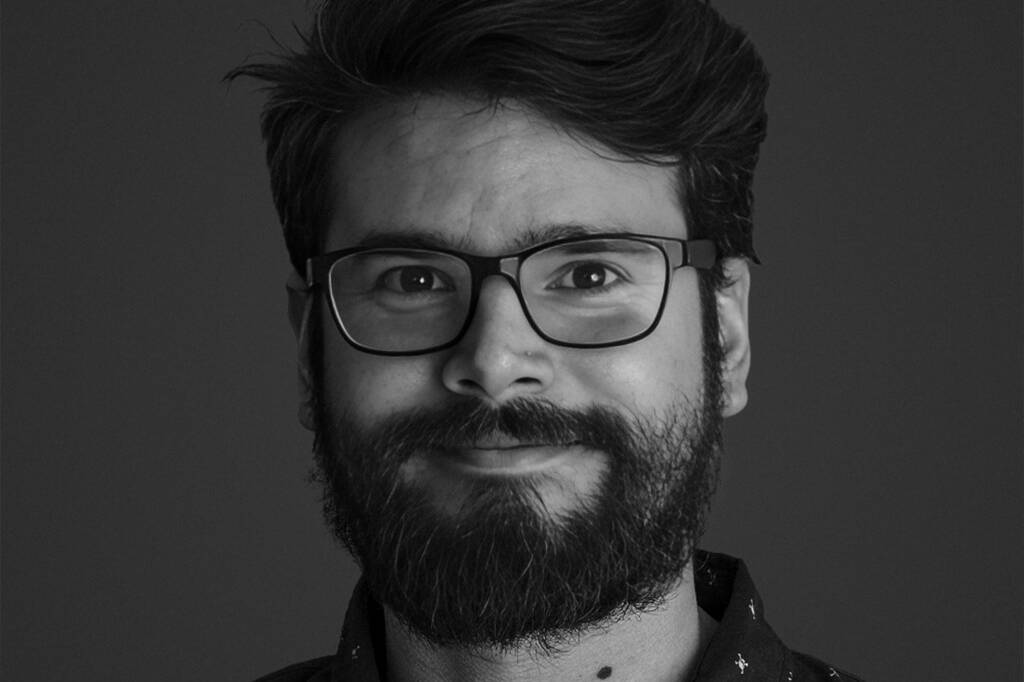
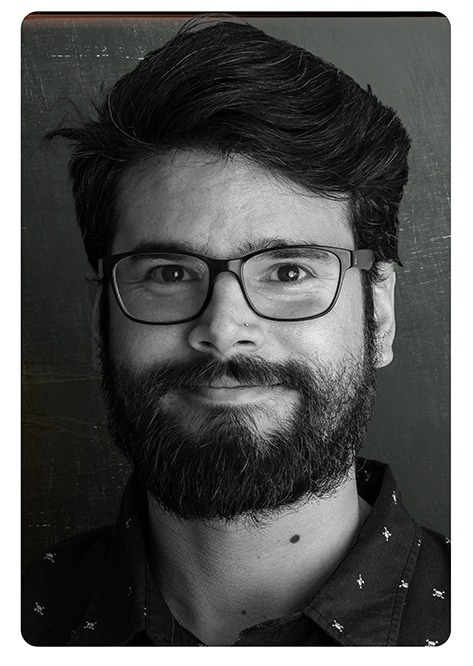
The person behind Final Stage Post House
Final Stage Post House is built around a simple idea: the last stage of a project should not feel like cleanup. It should feel like the moment the piece finally becomes itself.
That idea comes from Rodrigo Pérez-Segnini, the founder and creative force behind the studio. Rodrigo works across color, sound, photography, cinematography, editing, and finishing, not as separate boxes on a service menu, but as connected parts of the same language.
He is not interested in post-production as polish for polish’s sake. He is interested in what happens when image, sound, texture, rhythm, and delivery all start serving the same emotional truth.
Raised around light
Rodrigo’s relationship with images started early. His father was a professor of analog photography, so cameras, darkrooms, negatives, light meters, and the patience of film were not abstract ideas. They were part of the atmosphere.
That kind of education changes how you look at things. A frame is not just a frame. A shadow has weight. Texture carries memory. Color can make something feel honest, false, expensive, fragile, dangerous, or alive before anyone says a word.
Those instincts still sit underneath the work at Final Stage Post House. The process may involve modern cameras, HDR workflows, DaVinci Resolve, calibrated monitors, delivery specs, and a lot of technical discipline, but the foundation is older than the software. Look carefully. Listen carefully. Respect the material.
Obsessed with sound
Sound became its own obsession. Not just music, not just mixing, but the physics of it. Frequency. Distortion. Voltage. Space. The way a circuit can bend tone. The way modular synthesis can turn a small accident into a whole emotional direction.
While studying audio engineering, Rodrigo gravitated toward modular synthesis because it rewarded both discipline and play. You can design a system with intention, then still leave enough room for the machine to surprise you.
That mindset matters in post-production. The best work is not rigid. It is structured enough to protect the project, but open enough to discover what the piece is actually asking for.
Color as a second language
Rodrigo eventually brought that same curiosity into color. His color training was not just about making images look good. It was about learning how light, contrast, saturation, texture, skin tone, gamut, and display rendering shape the way a viewer feels.
He also completed advanced training with Hollywood colorist Dado Valentic, which sharpened his understanding of modern color pipelines, HDR, and the deeper structure behind image making.
For Rodrigo, color is not a filter. It is not decoration. It is a decision-making system. It helps tell the viewer what matters, where to look, what to feel, and how to trust the world on screen.
Why the process is so structured
Final Stage Post House is intentionally process-driven because Rodrigo has seen what happens when review stages collapse into each other. Notes get muddy. Taste gets confused with technical problems. Clients start reacting to unfinished work as if it is final. The project gets louder, not better.
So the studio treats post as a sequence of clear decisions. Editorial structure. Transitional refinement. Primary color. Secondary color. Sound shape. Finishing. QC. Delivery.
That structure is not there to make the work sterile. It is there to protect the creative part. When everyone knows what stage they are looking at, the conversation gets sharper, the trust gets stronger, and the final piece gets better.
The Final Stage mentality
Rodrigo did not build Final Stage Post House to be a generic post vendor. He built it as a finishing room for people who care about the last stretch.
For agencies, production companies, filmmakers, brands, and artists, that last stretch is where the work either sharpens or goes soft. Color can reveal the story. Sound can carry the emotional weight. Finishing can make the whole thing feel intentional instead of merely complete.
That is the job. Not to flatten the work. Not to over-style it. Not to chase noise. The job is to listen to the piece, find the pressure point, and bring it to the final stage with taste, control, and enough weirdness to keep it alive.