
You already know content matters. But content alone is not enough. What turns good content into unforgettable media is what happens after the shoot. Finishing is not optional. It is where your story gets its full power where every creative decision made on set is either honored or abandoned.
Color grading and mastering are the amplifiers. They are not polish. They are not decoration. They are essential storytelling infrastructure.
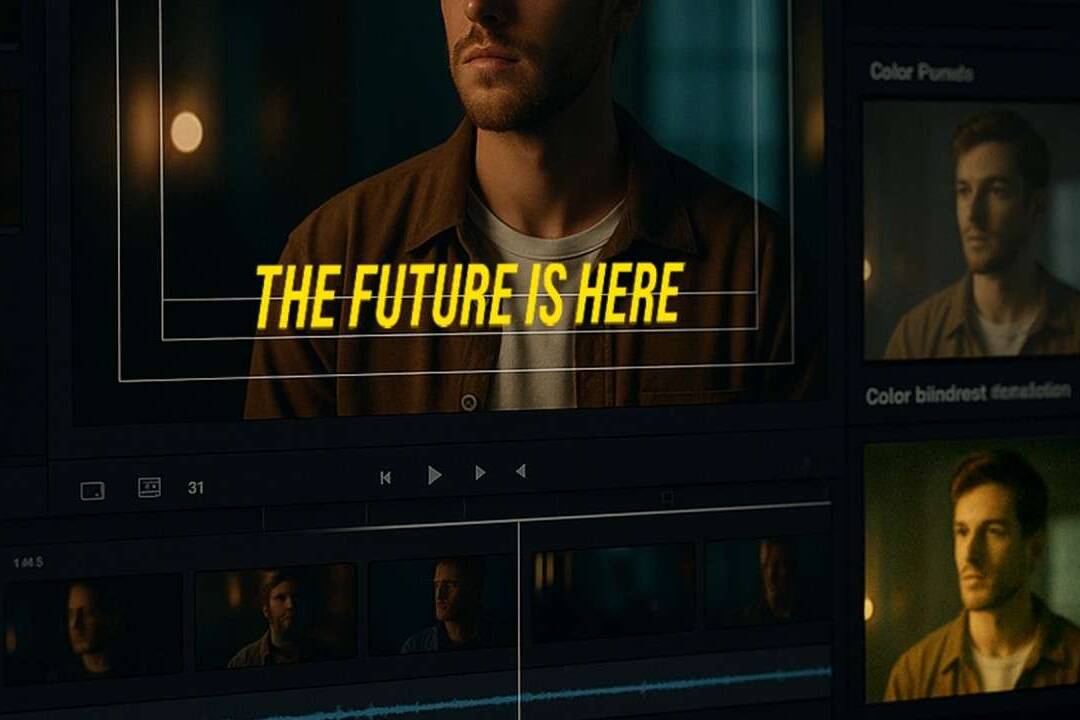
Color Grading: Visual Storytelling Control
Color is direction. Warm colors evoke nostalgia, energy, or intimacy. Cool colors suggest tension, control, or modernity. Desaturated looks bring realism or grit. Bold contrast pushes drama; flat contrast softens tone. These are not aesthetic preferences they are interpretive choices that tell the audience how to feel about what they are seeing, often before a single line of dialogue is delivered.
When you grade with intention, you are not just making the image look better. You are making the story emotionally legible. You are guiding interpretation, frame by frame. That is storytelling amplification in its purest form. For a deeper look at the psychology behind these choices, see The Power of Color Psychology in Film.
Mastering: Cross-Platform Confidence
Mastering prevents your story from being lost in technical translation. Content that looks great in your editor can look wrong on YouTube, degraded on a phone, or flat on an SDR monitor if the mastering decisions were not made with the delivery environment in mind. Audio must be balanced across headphones, phones, laptops, and speakers. Video must retain dynamic range across SDR and HDR environments. Deliverables must meet technical standards for broadcast, web, OTT, and social.
Mastering brings consistency, credibility, and clarity. You cannot afford to lose your story to avoidable technical issues in the final mile.
Style Is Not Aesthetic It Is Strategy
The choice between a film look and a clean digital look is not about taste. It is about what the story needs. A film look adds character: texture, grain, soft halation, and rich contrast. A clean digital look emphasizes detail, sharpness, and surface clarity. Monochrome, duotone, and pastel grades can amplify theme. Color choices signal era, mood, and identity. Each of these decisions is made during grading and each one should be made deliberately in service of the narrative.
HDR: The Next Storytelling Frontier
HDR delivers deeper blacks, brighter highlights, and richer colors than SDR allows. It is not just for Hollywood. With proper workflow, even small brands and independent creators can use HDR to stand out in a field of flat, SDR content. If you want your visuals to feel cinematic, immersive, and premium, HDR is available to you and it is worth the investment. Your story deserves that edge.
For the full picture on how finishing choices serve storytelling, see Fix It in Pre: Integrating Post in Pre-Production.
Related Reading from Final Stage Post House
- Finding the Perfect Exposure: Balancing Light and Sound
- Why Contrast Is Everything: The Hidden Language of Unforgettable Content (coming soon)
- Exploring Synergies: The Parallels Between Film and Tape
Frequently Asked Questions
What is the difference between color grading and mastering?
Color grading shapes the visual narrative look, mood, tone, and emotional direction. Mastering ensures the finished work translates correctly across all delivery formats and meets technical standards for loudness, dynamic range, and colorimetry for each platform.
Why does content sometimes look great in the edit suite but wrong on YouTube?
Editing software often operates in a wide-gamut, high bit-depth environment that does not match consumer displays or streaming platform processing. Proper mastering includes format-specific quality control checking the final deliverable on the target platform, not just the studio monitor.
Can independent creators benefit from professional color grading?
Absolutely. Color grading is not a luxury for big-budget productions. It is the single most cost-effective way to elevate perceived production quality and brand authority for any creator, at any scale.
Source: Cranking Your Story Up to 11 – Rodrigo Perez-Segnini on LinkedIn
Ready to crank your story up to 11? Let’s talk about what finishing strong looks like for your project.

Related Posts

June 18, 2026
What We Couldn’t Find, We Built Ourselves: The Spectra Toolbox for Colorists
When the tools didn't exist, Final Stage Post House built them. Meet the…

June 18, 2026
Ten Ways Visual Artists Can Advance Accessibility for the Visually Impaired
WCAG was written for developers, but visual storytelling must include everyone.…

June 18, 2026
Why Subtractive Color in an Additive World Might Change the Way You Grade
Subtractive color grading uses CMY-style thinking inside digital pipelines to…