
Originally published in Creative Alchemy Weekly by Rodrigo Perez-Segnini.
Working with expired film is not about chasing nostalgia. It is about protecting the material that is already there: grain, density, flicker, halation, and the small instability that makes photochemical images feel alive. At Final Stage Post House, that means using color grading as a finishing discipline, not as a costume.
Beyond Emulation: The Reality of Working with Expired Film
Not because film is mystical. Not because it is harder. Because it forced restraint. Let’s take a step back.
This was my first time grading real film. Not an emulation. Not a scanned log pretending to be film. Actual Super 16.
The process felt different immediately. The node structure simplified itself. The footage pushed back when I tried to impose anything.
That friction mattered. It made me ask a question I think every finisher should ask more often: what is my role here?
Am I imposing a look? Am I designing a look? Or am I listening to what already exists and helping it speak clearly?
Film arrives with character baked in: density, grain behavior, color bias, and inconsistency that is not a flaw.
Trying to tame or normalize these qualities felt dishonest. So the approach shifted: less shaping, more protecting. Less steering, more listening.
That shift took time. About an hour of sitting quietly before touching anything, thinking through intent before execution. What is this project’s philosophy?
Once the decision was made, the rest was simple: execute, stay minimal, do not second-guess, and most importantly, respect the material.
The Technical Backbone
Three nodes. The core structure was almost nothing:
- Input transform.
- Balance.
- Output transform.
A few problem shots needed attention, specifically underexposure, consistency across expired film and mixed stocks, intentional light leaks, and the invisible flicker inherent to the format.
The invisible flicker is a rhythmic pulse that the eye might miss but the scopes reveal instantly. Stabilizing that energy without killing the life of the frame is a delicate dance.
Even the grain work followed the same philosophy. Clean only what blocks image clarity. Extract luma without damaging texture. Rebuild the grain so it stays invisible.
If the audience notices grain work, it failed.
Why This Matters for Film Finishing
Super 16 color grading is not the same problem as digital film emulation. Emulation starts with a clean signal and adds behavior. Expired film post-production starts with real behavior and asks what should be protected, stabilized, or left alone.
That distinction matters for directors, cinematographers, and producers because the wrong finishing approach can erase the very reason the project was shot on film. The goal is not to sterilize the image. The goal is to make the image legible without flattening its memory.
This is also where a finishing house earns its keep. The best result is not the loudest grade. It is the one that lets the material feel inevitable.
The Result
The client never mentioned the nodes or the noise reduction. They noticed something else.
They said: “You respected the film.”
That sentence mattered more than any technical praise. Because finishing is not about showing what you can do. It is about knowing when not to do it.
There is a real difference between color correction and color grading. Correction is about clarity: exposure, continuity, legibility. Grading is about intent: tone, psychology, narrative weight.
Film often asks for more correction than grading. And that is not a downgrade. That is maturity.
This project reinforced something I believe deeply: our obligation as finishers is not to change the work. It is to elevate what is already there. To remove obstacles, not to rewrite the voice.
I walked away knowing two things: I love grading film, and I trust myself more when I know when enough is enough.
Related Reading from Final Stage
- Exploring Synergies: The Parallels Between Film and Tape for Narrative Storytelling
- The Power of Color Psychology in Film
- Building Your Color Philosophy: Developing Your Voice
FAQ: Working with Expired Film
Should expired film be cleaned up aggressively?
Only when the artifact blocks clarity. Grain, flicker, density shifts, and light leaks can be part of the image language. The finishing pass should separate damage from character.
Is film grading different from a film emulation look?
Yes. Film emulation adds film-like behavior to a digital image. Film grading protects and clarifies behavior that already exists in the scan.
Source: Creative Alchemy Weekly on LinkedIn.
Have film, archival, or mixed-format footage that needs a restrained finish?

Related Posts

June 18, 2026
You Locked the Picture. Now What? A Practical Audio Post Guide
Picture lock isn't the finish lineâit's the starting gun for audio post.…

June 18, 2026
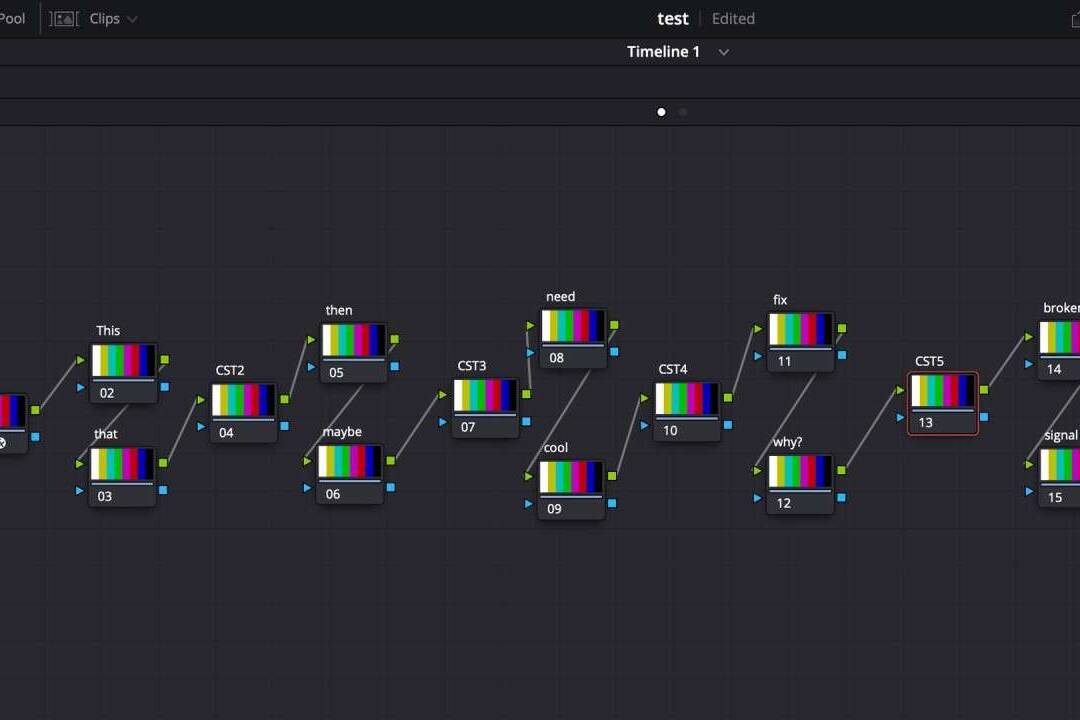
Color Space Transforms in DaVinci Resolve: How Many Is Too Many?
Stack too many CSTs in DaVinci Resolve and you risk banding, hue shifts, and…

June 18, 2026
The Frequencies That Shape Our Perception
Light and sound are both waveforms processed by biology. Understanding how we…