Building Your Color Philosophy: Developing Your Voice
At some point, I realized the technical is not neutral.
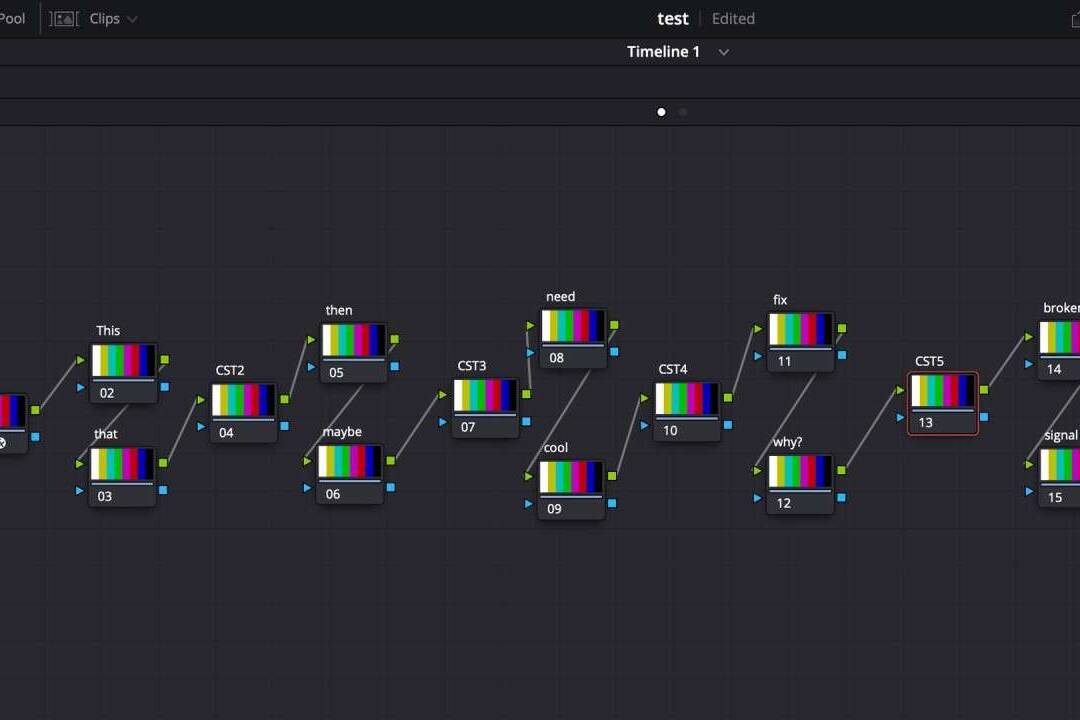
My node trees were not set in stone, but they were not loose either. They each followed a logic and an intention informed by the look development stage.
Sure, it starts like a jam: the what-ifs and how-abouts. But just like wild cattle, at some point we need to herd this.
A philosophy emerges. Could this be my voice? A unique perspective informed by the wish and directed by the scope?
Your color space, your processing order, and where you place your look node all reveal something. Not just about the image, but about you.
This is where philosophy enters the room. It usually sneaks in quietly, under the hood of habit.
You build a structure because it works. But over time, that structure becomes a voice. If it is in constant flux, what does that say about you as an artist?
Structure Reveals Philosophy
Take this layout:
IDT → negative → CDL → look → secondaries → texture → ODT
For this structure, the negative early is an homage to the filmic approach. But what if we expose before the negative, as if the CDL were the camera?
IDT → CDL → negative → look → secondaries → texture → ODT
Those questions compose your look development philosophy. You are not reactively chasing a look. You are efficiently setting an overarching tone.
Other colorists build differently. Some front-load the look, letting emotional tone guide every step after. Others create parallel paths to test options side by side.
Each approach says something. Your structure reveals how you think, technically and creatively. It shows what you value and what you are willing to let go of.
When your architecture is sound, your instincts have room to operate. You are not second-guessing. And the more consistent that structure becomes, the louder your voice gets.
Process Is Louder Than Style
There is a difference between aiming for a film look and understanding how film thinks.
Subtractive color is not a trend. It is part of my color philosophy.
Film blocks light. It removes. It carves. Just like shaping sound by taking out harsh frequencies, this is an approach: taking out red, green, or blue with printer lights.
When you approach digital grading this way, you are revealing what is already there through discipline and craft.
That is the difference between applying a LUT and creating a process you trust across projects. Nothing is wrong with LUTs. Anything and everything goes. But process is what lets the look survive context.
Technical Flexibility, Creative Consistency
I will use JPlog2 on one job, ACES 2 on the next, and LogC when the project makes that obvious.
That does not change who I am. It means I am listening.
JPlog2 gives me nuance. ACES 2 gives me structure. LogC was obvious when the whole campaign was shot on ARRI cameras.
Neither is better. They are different doors into similar rooms. What matters is knowing why I reach for one over the other, and what it allows me to say.
Gear changes. Specs change. Deliverables shift. But your voice should hold, unless you choose to evolve it.
Color philosophy is not something you build once. It is something you revisit every time you hit play.
Source: Creative Alchemy Weekly on LinkedIn.
Want a second set of eyes on your color pipeline?
Related Posts
June 18, 2026
You Locked the Picture. Now What? A Practical Audio Post Guide
Picture lock isn't the finish lineâit's the starting gun for audio post.…
June 18, 2026
Color Space Transforms in DaVinci Resolve: How Many Is Too Many?
Stack too many CSTs in DaVinci Resolve and you risk banding, hue shifts, and…

June 18, 2026
The Frequencies That Shape Our Perception
Light and sound are both waveforms processed by biology. Understanding how we…